Thursday, 31 January 2013
Camera Practise
Today we practised filming some more to form diffenet atmospheres through camera angles. In each shot we had to include the phrase 'What are you doing here' We did drama through me and EJ having a coversation and then chris walks past, interrupting us where we both say the phrase, We also attemped horror by the camera zooming in on my unexpecting face, making the camera shot a monster or unnatural being. Attacking me. To where i say the phrase what are you doing here. Which I thought worked quite well as the we used an unsteady hand which made it seem like something living was attack me.

Tuesday, 29 January 2013
Soundtrack Recording
After looking into the type of soundtrack we want to use. We've been looking into how we are going to record the music for our film, After looking ionto the type of soundtrack we want to use,We already went and looked at cubase a music recording software on the computers in the musc department. However we are not sure if its the best idea would be as firstly, its quite time consuming and its also not the best sounding instruments as its all MIDI based. (Meaning a low quality produced file which is electronically produced) When we want something which will sound good. Howeve i have facilities at home which suffice this. So we will continue to experiment.
How old are you?
under 10
15-19
What film Genre do you generally like?
Comedy
What is your favourite time period that movies are set in?
Present
80s-90
How often do you generally watch films?
On average once a week, but really when ever i feel like it
Have you ever seen a gangster film?
Yes
What is your view on gangster films?
Good
What catches your eye in the first 2 minutes of a film?
A scene which sets up the film and makes you hungry for more and to see the story progreess.
Is there anything that may be in the first 2 minutes of a film that may deter you from watching the rest of it?
Probably the theme, i like to see a story thats going somewhere, But not reveal to much at the start
under 10
15-19
What film Genre do you generally like?
Comedy
What is your favourite time period that movies are set in?
Present
80s-90
How often do you generally watch films?
On average once a week, but really when ever i feel like it
Have you ever seen a gangster film?
Yes
What is your view on gangster films?
Good
What catches your eye in the first 2 minutes of a film?
A scene which sets up the film and makes you hungry for more and to see the story progreess.
Is there anything that may be in the first 2 minutes of a film that may deter you from watching the rest of it?
Probably the theme, i like to see a story thats going somewhere, But not reveal to much at the start
Thursday, 10 January 2013
R & P: Actors

Will Squire (me) (in costume) - Henchman - Picked for this role purely for looks as I'm very well built as henchmen tend to be the same for the 'tough guy look' to make it believable.

Elijah Jago (in costume) - Boss - Chosen for this role as he is quite smart and tidy. Also it made sense for him to be the mob boss as I was more suited to the role of Henchman,

Chris Robinson (with white t-shirt) - Victim - We wanted to make the victim scruffy or messy to make him seem like a less powerful character with nothing to loose and being as chris is quite a scruffy person with his long hair he seemed quite fitting for the role.
Saturday, 15 December 2012
R & P: Film Title Ideas
- Themes
- Fight For Life
- Redemption
- Repent
- Rapture.
I got this idea from a song i rather like. Its a song which meaning is about 'staring the devil right in the eyes... and knowing, no matter what the hell you do, he'll get the last laugh...and it's real...and true. The devil really will get the last laugh in all cases without exception, and if I let myself think about that to long' - This theme relates to our film as Butcher Pete (EJ) character can be very representative of the in escapeable devil and how we see the film of the point of view of Suicidal Micheal (Chris) who is on the run from him.

 I Also thought of the theme of being caught doing something, like Suicidal Micheal has been caught doing, cheating deals. I thought about saying around causing trouble i thought Red Handed, This promotes many themes: Danger, Being Caught, Punishment and the colour red brings about the theme of blood for me, so it seemed fitting.
- Fight For Life
- Redemption
- Repent
- Rapture.
I got this idea from a song i rather like. Its a song which meaning is about 'staring the devil right in the eyes... and knowing, no matter what the hell you do, he'll get the last laugh...and it's real...and true. The devil really will get the last laugh in all cases without exception, and if I let myself think about that to long' - This theme relates to our film as Butcher Pete (EJ) character can be very representative of the in escapeable devil and how we see the film of the point of view of Suicidal Micheal (Chris) who is on the run from him.

Friday, 14 December 2012
Audience Research - Questionare
How old are you?
under 10
10-14
15-19
20-24
25-29
30-34
35-39
40 or over
What film Genre do you generally like?
Action
Romance
Comedy
Adventure
Sci -Fi
Fantasy
Horror
Other (please specify)
What is your favourite time period that movies are set in?
Present
80s-90
60s-70s
40s or before
Future
No preference
How often do you generally watch films?
More than once a week
Once a week
More than once a Fortnight
Once a fortnight
More than once a month
Once a month
More than once a year
Once a year or less
Have you ever seen a gangster film?
Yes
No
What is your view on gangster films?
Very good
Good
OK
Bad
Very Bad
What catches your eye in the first 2 minutes of a film?
is there anything that may be in the first 2 minutes of a film that may deter you from watching the rest of it?
under 10
10-14
15-19
20-24
25-29
30-34
35-39
40 or over
What film Genre do you generally like?
Action
Romance
Comedy
Adventure
Sci -Fi
Fantasy
Horror
Other (please specify)
What is your favourite time period that movies are set in?
Present
80s-90
60s-70s
40s or before
Future
No preference
How often do you generally watch films?
More than once a week
Once a week
More than once a Fortnight
Once a fortnight
More than once a month
Once a month
More than once a year
Once a year or less
Have you ever seen a gangster film?
Yes
No
What is your view on gangster films?
Very good
Good
OK
Bad
Very Bad
What catches your eye in the first 2 minutes of a film?
is there anything that may be in the first 2 minutes of a film that may deter you from watching the rest of it?
Tuesday, 11 December 2012
R & P: Camera Shot Types


A cutaway is a shot that's usually of something other than the current action. It could be a different subject (eg. this cat when the main subject is its owner), a close up of a different part of the subject (eg. the subject's hands), or just about anything else.
The cutaway is used as a "buffer" between shots (to help the editing process), or to add interest/information.
The cutaway is used as a "buffer" between shots (to help the editing process), or to add interest/information.
Can be used purely as an edit point, or to emphasise emotion etc. For example, hand movements can show enthusiasm, agitation, nervousness, etc.
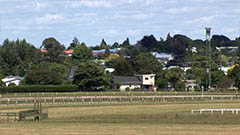

The EWS is often used as an "establishing shot" - the first shot of a new scene, designed to show the audience where the action is taking place.
It is also useful in scenes where the action is very spread out. For example, in a war movie an extreme wide shot can show the scale of the action.
The EWS is also known as an extra long shot or extreme long shot (acronym XLS)
.
The very wide shot is much closer to the subject than an extreme wide shot, but still much further away than a wide shot. The subject is visible here but only just (in this case it's a boy leaning against the fence). The emphasis is very much on placing him in his environment.
This often works as an establishing shot, in which the audience is shown the whole setting so they can orient themselves.
The VWS also allows plenty of room for action to take place, or for multiple subjects to appear on scre
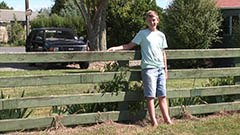 In the wide shot, the subject takes up the full frame. In this case, the boy's feet are almost at the bottom of frame and his head is almost at the top. Obviously the subject doesn't take up the whole width and height of the frame, since this is as close as we can get without losing any part of him. The small amount of room above and below the subject can be thought of as safety room — you don't want to be cutting the top of the head off. It would also look uncomfortable if his feet and head were exactly at the top and bottom of frame.
As with many shot types, the wide shot means different things to different people. However the wide shot seems to suffer more from varying interpretations than other types. Many people take the WS to mean something much wider than our example, i.e. what we would call a very wide shot.
 The mid shot shows some part of the subject in more detail, whilst still showing enough for the audience to feel as if they were looking at the whole subject. In fact, this is an approximation of how you would see a person "in the flesh" if you were having a casual conversation. You wouldn't be paying any attention to their lower body, so that part of the picture is unnecessary.
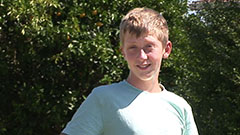 The MS is appropriate when the subject is speaking without too much emotion or intense concentration. It also works well when the intent is to deliver information, which is why it is frequently used by television news presenters. You will often see a story begin with a MS of the reporter (providing information), followed by closer shots of interview subjects (providing reactions and emotion).
As well as being a comfortable, emotionally neutral shot, the mid shot allows room for hand gestures and a bit of movement.
The medium closeup is half way between a mid shot and a close up. This shot shows the face more clearly, without getting uncomfortably close.
In the closeup shot, a certain feature or part of the subject takes up most of the frame. A close up of a person usually means a close up of their face (unless specified otherwise).
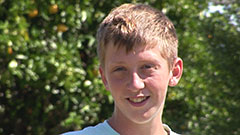 Close-ups are obviously useful for showing detail and can also be used as a cut-in.
A close-up of a person emphasizes their emotional state. Whereas a mid-shot or wide-shot is more appropriate for delivering facts and general information, a close-up exaggerates facial expressions which convey emotion. The viewer is drawn into the subject's personal space and shares their feelings.
A variation is the chocker shot which is typically framed on the subject's face from above the eyebrows to below the mouth.
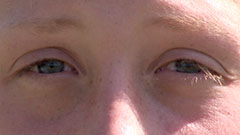
The ECU (also known as XCU) gets right in and shows extreme detail.
You would normally need a specific reason to get this close. It is too close to show general reactions or emotion except in very dramatic scenes.
A variation of this shot is the choker.
choker
Subscribe to:
Posts (Atom)